Cultivating Serenity.
Growing Nature.
Bamboo Price List
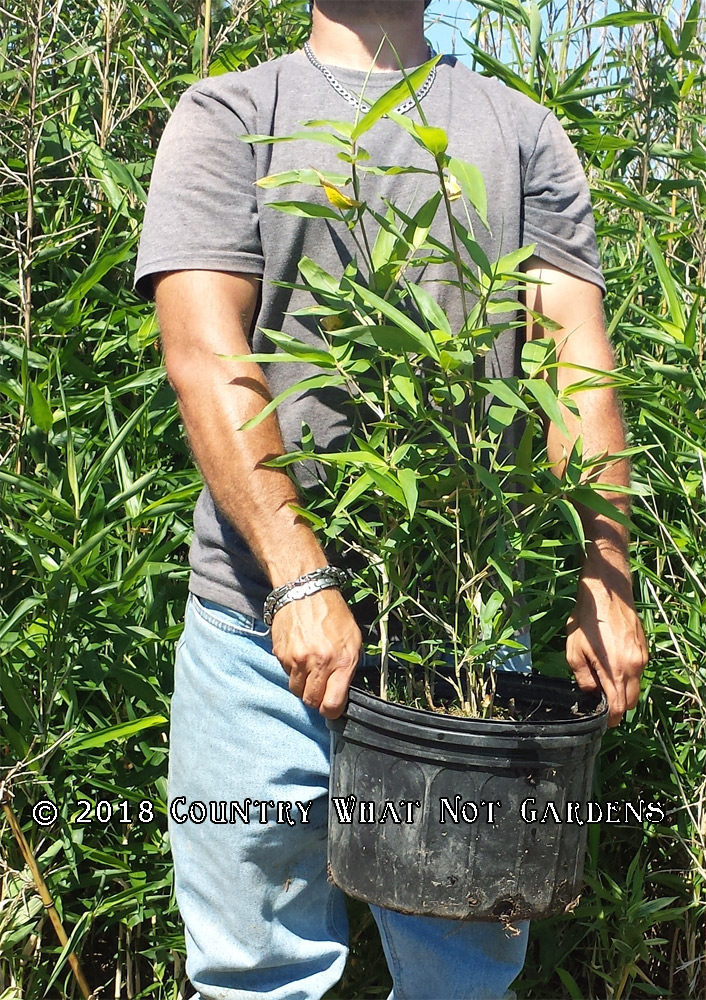
Back to Prices Scroll to the bottom for more description. Below: A 3 gallon 'Macon' plant
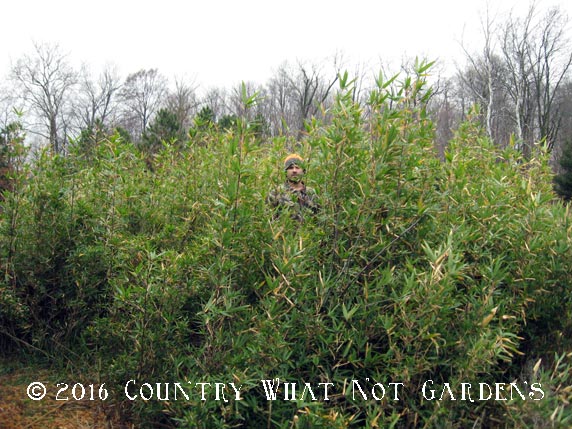
Here we offer the more upright and cold hardy of the ecotypes of this species. It comes from Macon County located in Tennessee. This super cold hardy ecotype has survived temperatures lower than -20ºF. Since we acquired this bamboo in 1998, it has only top-killed one winter. That happened on Jan 30th, 2019 when the temperature fell to -20ºF, but there were 40 mph winds along with that temperature. The winds were the main factor in the top-kill. The grove completely grew back during a few week period that spring. In the accompanying photo we can see what a great hunting blind is provided by the Macon River Cane. It also provides excellent cover and habitat for wildlife. Grow this ecotype in full sun to part shade in well drained to moist soils, but never in a site that remains soggy for periods longer than a few days at a time after rains. If you live south of USDA zone 7 where winter hardiness is less of an issue, you might consider planting the straight species rather than 'Macon'. - In loving memory of Uncle Ron and Aunt Beulah [Ronald D. and Beulah Mae (Shoemaker) Conner], who collected this bamboo ca. 1998 and gifted it to me because they knew I was interested in growing more bamboo. This was the second plant added to my collection.
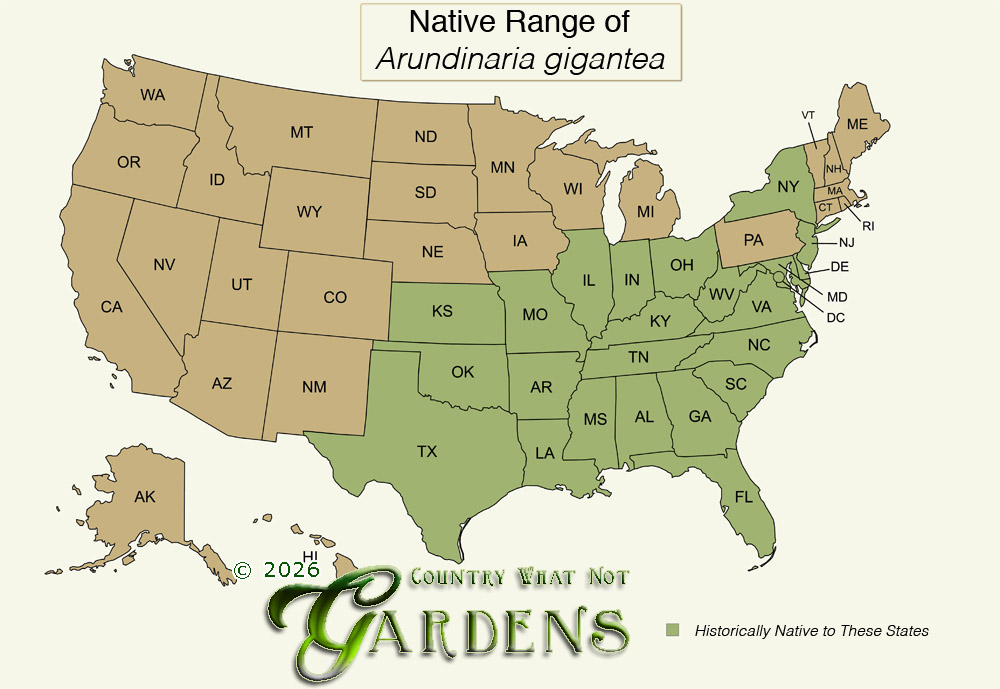
U.S. Native Range & Habitat - While botanical databases traditionally map Arundinaria gigantea across entire state footprints,
the plant itself was historically restricted to specific, moisture-rich micro-habitats, although it does well in regular garden soil and is drought tolerant once established. It is important to note that the entirety of the native range would have hosted varying ecotypes of the species. Not all examples of the species would have been identical or exhibited the same degree of cold hardiness. View State-by-State Historical Range Details
 Unsure of your Plant Hardiness Zone?No Problem! Check Your Growing Zone Below. |