Cultivating Serenity.
Growing Nature.
Bamboo Price List
Back to Prices
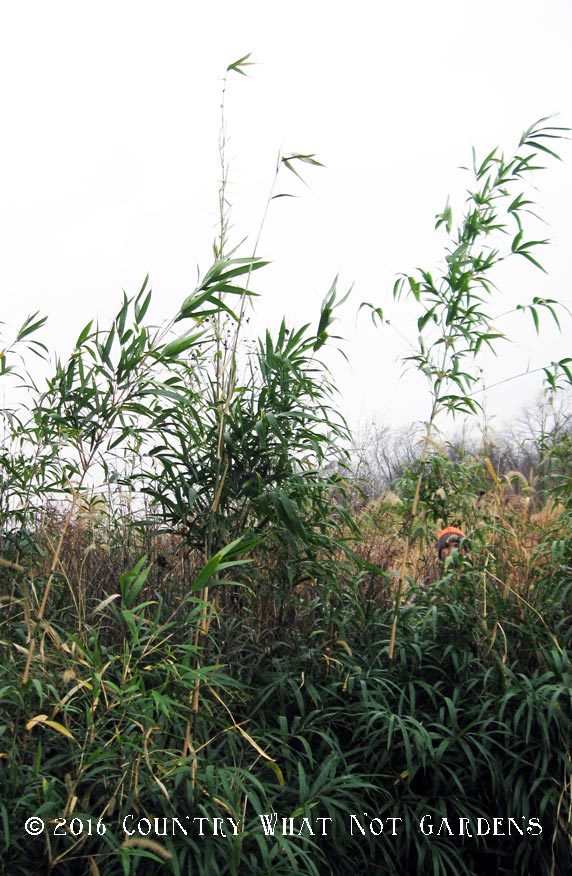
This plant that favored growing on elevated river banks of fertile soil also provided fresh, cut on site culms for fishing poles to fishermen looking to feed their families or those who simply wanted to enjoy a lazy day. Canebrakes have even been made mention in country and blues music. It was Tennessee Ernie Ford in his song 'Sixteen Tons', who said, "I was raised in the canebrake by an ol' mama lion", to assert his resistance to being easily tamed into a domestic lifestyle. This native bamboo has unjustly, in our opinion, been labeled by some as "ugly" or "unsightly" in contrast to more visually striking or aesthetic exotic species. Let's not forget the historical role it played in our land. It was unfortunately eradicated during forgotten bygone decades in most of its former range when our lands were cleared for farming and residential development. It once grew in vast thickets, or canebrakes, that stretched for miles in some areas. It now occupies less than 2% of its former range. Now with the interest many have taken in ecological reconstruction, it's our hope that our native Arundinaria species can be reintroduced into portions of its former range. We promote the planting of our native species when planting bamboo in more wild areas outside of landscaping applications so that non-native, exotic species don't displace other native plant species. Grow this species in full sun to part shade in well drained to moist soils, but never in a site that remains soggy for periods longer than a few days at a time after rains.
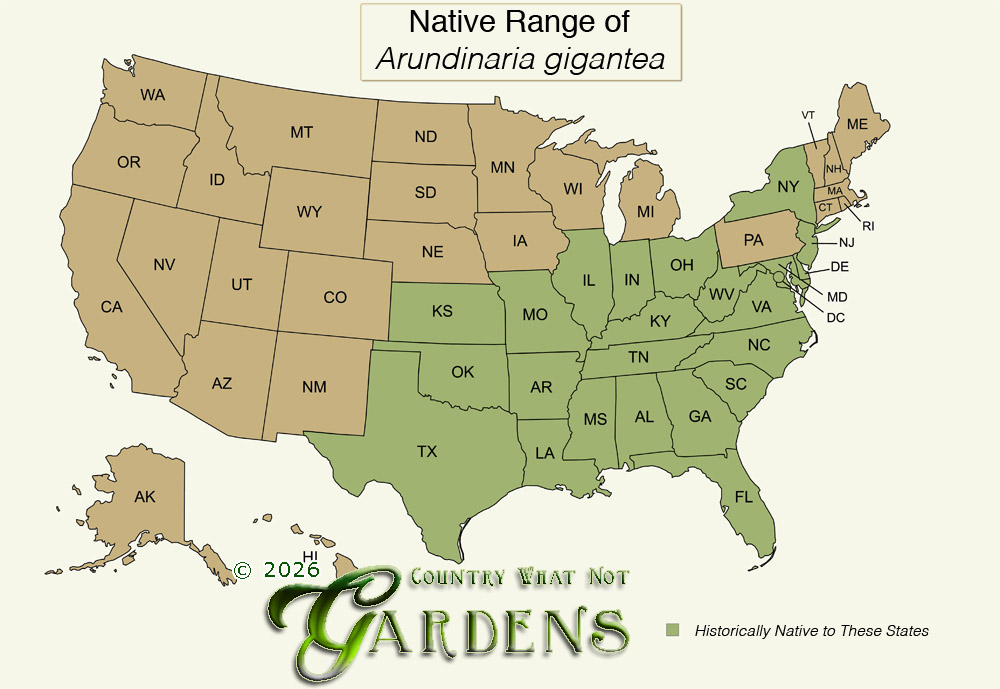
U.S. Native Range & Habitat - While botanical databases traditionally map Arundinaria gigantea across entire state footprints,
the plant itself was historically restricted to specific, moisture-rich micro-habitats, although it does well in regular garden soil and is drought tolerant once established. It is important to note that the entirety of the native range would have hosted varying ecotypes of the species. Not all examples of the species would have been identical or exhibited the same degree of cold hardiness. View State-by-State Historical Range Details
 Unsure of your Plant Hardiness Zone?No Problem! Check Your Growing Zone Below. |